Code locks, digital locks and smart locks compared
No key to lose is attractive. Here is how the options differ.
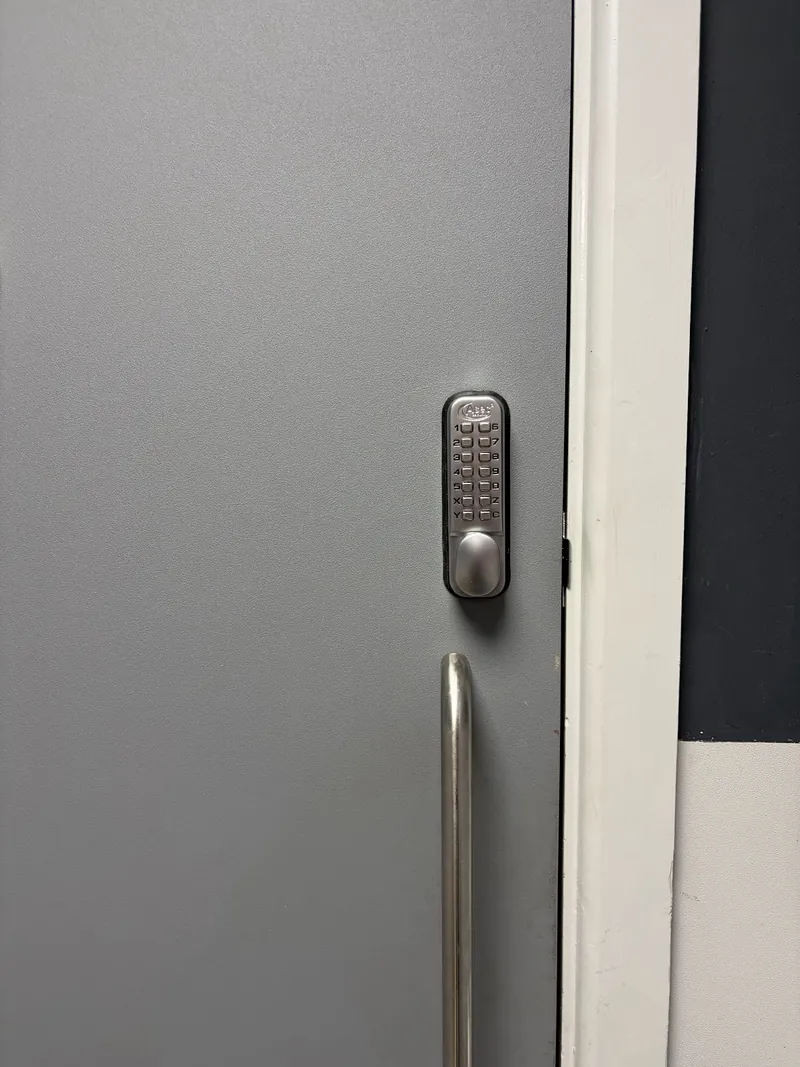
- Subject
- Code locks and digital locks compared
- Series
- Guides
Mechanical code lock
No battery, no electronics. Robust. Good for fire doors, staff rooms and holiday lets. Change the code regularly.
Digital locks and access control
Battery or mains, many codes or fobs, and logs. Good for offices and shared buildings.
Smart locks
Phone or code control, remote guest access, usually Wi-Fi or Bluetooth. Tony lists Yale smart locks.
Weak points
Batteries, codes shared too widely and a weak door. A smart lock is only as strong as the door.
Changing codes
Change a code when staff or tenants leave, when a code has been shared widely and on a regular schedule. A code that has not changed in years is effectively public. A mechanical code lock can be reset by hand, and electronic systems let you delete one user.
Where a key is still best
For a house front door with a few residents, a good key lock on a sound door is simple and robust. Codes and smart locks add convenience, not necessarily security. Choose them where convenience matters.
Quick answers
Which is most secure?
It depends on the door and how it is used.
Do they need maintenance?
Batteries and occasional checks.
Can I still use a key?
Many allow a backup key.